
News
Aug 13
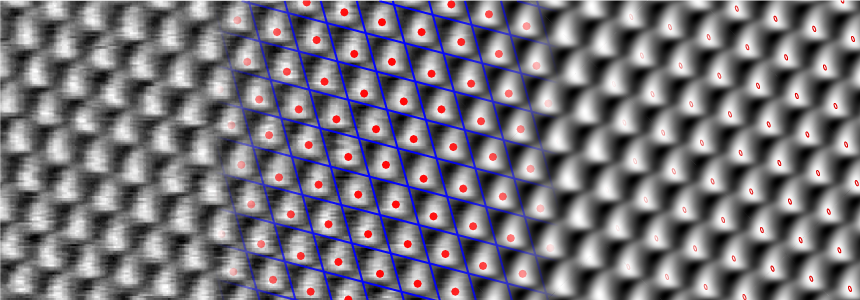
Robert Lewis-Swan contributes to Science article
Robert Lewis-Swan, an assistant professor in the Homer L. Dodge Department of Physics and Astronomy in the College of Arts and Sciences at the University...
Dec 10
Amber Roepe selected for APS Division of Particles and Fields Ethics Advisory Committee
This past summer, the American Physical Society’s (APS) Division of Particles and Fields (DPF) formed the Ethics Advisory Committee (EAC). The...
Mar 25
Physics & Astronomy Offices are Closed
In order to comply with recent public health statements from our Provost, in consultation with OUHSC and the Centers for Disease Control, our departmental offices...
Aug 26
CQRT hiring multiple faculty: applications due by October 20
The Homer L. Dodge Department of Physics and Astronomy at the University of Oklahoma (OU) invites applications for five faculty appointments in the areas of...

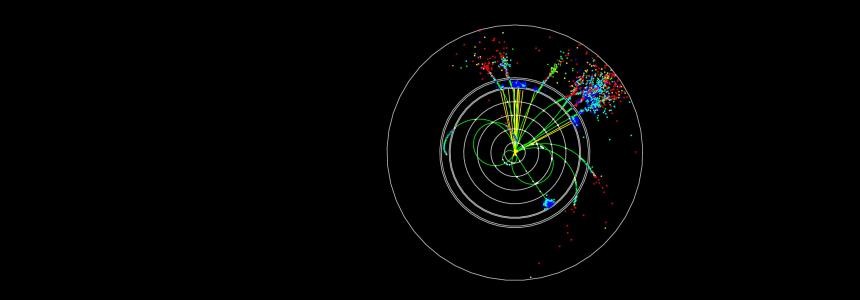
Featured Research: 25 years on: a single top quark partners with the Z boson
A quarter-century after its discovery, physicists at the ATLAS Experiment are gaining new insight into the heaviest-known particle: the top quark. The huge amount of data collected during Run 2 of the LHC (2015-2018) has allowed physicists to study rare production processes of the top quark in great detail, including its production in association with other heavy elementary particles. This measurement was made possible in part due to significant contributions from OU physicists M. Alhroob, P. Gutierrez, J. Lambert, and B. Abbott.
In a new…
